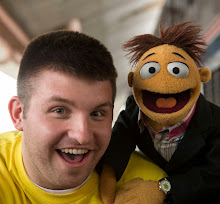
Interview with Joseph Bailey
Conducted by Ryan Dosier
 RYAN:
RYAN: We’re very excited today to welcome longtime Muppet writer Joseph Bailey onto The Muppet Mindset! Joe is here to promote his book,
Memoirs of a Muppets Writer. Joe has worked on
Sesame Street,
The Muppet Show,
Christmas Eve on Sesame Street, along with numerous albums, songs, and stage shows. But who better to hear it from than the man himself, Mister Joseph Bailey! Welcome to The Muppet Mindset, Joe!
BAILEY: Thanks, Ryan.
RYAN: I’m sure you discuss this in the book, but could you give us a brief synopsis of how you first got involved with Jim Henson and the Muppets?
BAILEY: Well, that is in the book. I started my writing career as an advertising copywriter. I was actually a Mad Man in the 1960s with a closet full of continental suits and an office on Madison Avenue. Some time around 1970, the agency I was working for went out of business. We found that out one Monday morning when the staff showed up for work and the door was locked. Since advertising was in a slump, I made ends meet by tending bar and working on commercial film sets--a lot of my friends were in film and theatre.
One day I got a call from a woman in that crowd. She had gotten a job in Boston producing a children's show called, Jabberwocky and she needed writers. I wrote some audition material and they assigned me a script. Over the next couple of years I wrote about 50 scripts for Jabberwocky. But then the show ran its course and went out of production. (In the name of disclosure, I should tell you I eventually married that woman and she still thinks I’m a pretty good writer.)
Not knowing what else to do, I called Sesame Street, talked my way past the switchboard and got an interview with Bob Cunniff, who was then the show's producer. I wrote some audition material for Bob and was hired by Jon Stone, then Sesame Street’s Executive Producer.
 RYAN:
RYAN: What was the first major project you worked on?
BAILEY: I was signed first to a four script contract. So, I would have to say my first project was
Sesame Street Show Number 571. Later, I was signed to a season contract.
RYAN: Who were some of the other writers that you enjoyed working with?
BAILEY: Well, Jon Stone was also the Head Writer when I joined Sesame Street and he also directed most of it. Later on, I wrote for Norman Styles when he became the Head Writer. But, unlike many shows today, Sesame Street wasn't written by committee. A writer was assigned a script for a particular day's show, and he or she was responsible for the entire show script. So, although there were many fine writers on the staff, like Emily Pearl Kingsley or Ray Sipherd, we didn't actually work together. Eventually, I did co-write a lot of stuff with Jon.
RYAN: What about the Muppet performers? Did you get to work closely with any of them?
 BAILEY:
 Sure. The first four seasons I worked on
Sesame Street, I wrote about 20 scripts a season. And, I made it a point to be in the studio whenever anything I wrote was being shot. So, I got to know the original Muppet guys from those years pretty well. I consider Carroll Spinney, Jerry Nelson, and Frank Oz to be close friends, as I did with Richard Hunt and, of course, Jim. Dave Goelz and I became friends when I joined
The Muppet Show in 1977. Since Jerry and Richard also worked
The Muppet Show, we spent a lot of time together in London.
RYAN: Many of the writers I’ve talked to always have favorite Muppets to write for. Which characters did you most enjoy writing for on The Muppet Show?
BAILEY: Since I'm probably an anarchist at heart, I always got a kick out of writing for Animal. I also have a soft spot in my head for Dave Goelz’s Gonzo. I wrote the Swedish Chef/lobster bit as part of my Muppet Show audition material. Of course, Piggy and Kermit's relationship was a constant source of material.
RYAN: What about Sesame Street?
 BAILEY:
 Since Carroll Spinney, who plays Big Bird and Oscar, was available every day on Sesame Street, I wrote a lot of material for his characters. Carroll, quite simply, is a genius. I also liked writing for Cookie. Carroll once told me that when you create a puppet, you indicate how intelligent it is by how much cranium you give it. Big Bird has a pretty good sized brain. Of course, it is made of feathers. Cookie has no cranium at all. He's a mouth with eyes. He's pure id. I used him to show the kids that we were on their side--that they weren't the only ones who occasionally have an attack of, I gotta, gotta, gotta have it right now, now, now! Gimme! Gimme! Gimme!
RYAN: One of my personal favorite Christmas specials of all-time is
Christmas Eve on Sesame Street. What was the best part of working on that special?
BAILEY: Not to bring it up again, but Christmas Eve takes up a whole chapter in the book. Jon Stone was Sesame Street in those days, He was my co-writer on the special. But he was also the Executive Producer and the Director. So, Jon had a lot of visuals in his head that he didn’t put into the script. He didn’t have to. So, a lot of the show was a surprise to me when I first saw it screened.

I was at the skating rink when we shot the opening. But I had no idea how beautifully it would turn out, including Oscar's never-ending fall/crash down the stairs. A bit of inside skinny--When Big Bird asks Oscar if he's okay, my original line was: "Sure. I've been thrown out of better places than that." I guess Jon considered it to be too adult, so the "Let's go back and do it, again!" line was dubbed in later.
I also wasn't around when he shot the interviews with the Muppets and the kids about how Santa gets down the chimney. That was pure magic. The "Keep Christmas With You" sign language song was also a surprise. Most of the main story line was written in collaboration. Most of the "heart" was Jon. I wrote the Cookie-writing-to-Santa scenes. When Cookie gets Santa on the phone, it's Jon Stone doing Santa's voice. Most people don't know that I wrote the Bert and Ernie/Gift of the Magi sequence for a Christmas album several years earlier.
I was just at a screening of Christmas Eve at the Museum of the Moving Image. It was great to see it on a big screen in front of a live audience. But it's a little weird to hear people finally laugh at jokes you wrote over 30 years ago. It was also bitter-sweet since so many people on the show are gone now.
RYAN: You worked on quite a few Sesame Street music albums as well. Can you talk to us about the process that goes into working on an album for the show?
BAILEY: Well, the Bert and Ernie/Magi sequence was instigated in a record meeting when Jim said, "Let's do something on the Gift of the Magi." That was how Jim worked. He'd throw out a rough suggestion and let you run with it.

The Bert and Ernie SING-ALONG album just started with an idea from Jon Stone to do, well, a sing-along. I was watching a lot of the Marx Brothers in those days. So, an idea hit me to do a riff on the state room scene from
A Night at the Opera. It started with Bert singing in the bathtub. Ernie hears him and decides the bathroom is a great place to sing because of the acoustics. So, he joins Bert in the bathroom--with his piano. As the album goes along, more and more of the people and Muppet cast come in and sing along--some with instruments, like a bass fiddle and some by motorcycle like Herry Monster. Since a record album is basically a radio show, I could make it as outrageous as I wanted. And then, Jon liked it so much we did a video version of it on
Sesame Street. That was quite a production!
RYAN: One of the other challenging aspects of writing for
The Muppet Show was writing for the various guest stars on the show. How much input did the various stars have on the material written for them?
BAILEY: Jim Henson was a very cordial man and that cordiality permeated
The Muppet Show. So, before we started a script, Head Writer, Jerry Juhl, would call the guest star and ask them what they wanted to do. Usually the singers wanted to sing and the dancers wanted to dance. But Beverly Sills, the opera star, said she wanted to tap dance and sing a Country and Western song. We were happy to accommodate her.
Usually, there was a one-on-one interview with Kermit and the guest star. But when Peter Sellers saw the interview in his script, he asked what character he would be playing. When he was told to just use his own personality, he said he couldn't. He said he once had a personality but he’d had it surgically removed.

Finally, I guess Jim and Rudolf Nureyev dreamed up the idea of Nureyev dancing with a pig, in the famous Swine Lake ballet. Writers love music and dance numbers. It's three or four minutes we don't have to write. So, I wrote, "RUDOLF DANCES WITH A PIG," and continued writing the script. Jerry Juhl called me into his office and said we couldn't give the great Rudolf Nureyev a script that just said, "RUDOLF DANCES WITH A PIG." We needed a page and a half of "something."
I went back to my office and realized that I was supposed to create choreography for the great Rudolf Nureyev–Not exactly my strong suit. My inspiration finally came with the word, "perhaps." Perhaps the pig can lift Mr. Nureyev. Or, perhaps Mr Nureyev can throw the pig in the air and, perhaps the pig can land on him and knock him on his keister. I stretched that out for a page and a half.
RYAN: Any favorite guest stars to work with?
BAILEY: Well, Bob Hope said some really nice things about
The Muppet Show writing staff. Gotta love him for that! Jaye P. Morgan said she would do anything with a Muppet. All Elton John could talk about was his soccer team, Watford. One day after rehearsal, Edgar Bergen did about an hour’s private performance for us with all his characters. I remember Jim and the crew were sprawled on the floor like a bunch of 12-year-olds watching television. And, working with Milton Berle was like a crash course in comedy. I devoted a whole chapter in the book about working with him.

Zero Mostel came into the script read-through bent over with a cane. It was painful to watch him walk. He looked like a very old man on his last legs. I remember worrying if he’d live through the show. Half way through the script, he asked for a line change. Jerry Juhl said we’d look at it later. Zero asked again and Jerry put him off. Zero asked again, a little more insistently. This happened a few more times. Suddenly, with a great roar, Zero leaped to his feet, threw his cane in one direction and his chair in the other. He raced around the table and threw a hammer lock on poor Jerry. "I want that line changed!" Zero hissed at Jerry. Needless to say, Jerry changed the line right then and there.
RYAN: What is your favorite memory of working on
The Muppet Show?
 BAILEY:
 Wow! That’s like asking a parent, "Who's your favorite kid?" But a few come to mind: Kermit playing a lady wrestler in drag; Fozzie doing his act on rollerskates; Gonzo jumping a motorcycle from the stage into the Statler and Waldorf’s box; and Piggy’s aerobic lesson. But, I’d also have to say it was the dedication pf the puppet builders and the cast to bring my humble scribblings to life. I mean, my scripts called for thinks like moose puppets, Japanese pole vaulters, and chicken cowboys. Whatever it was, the shop would go right to work on them. The finished character was usually better than I ever imagined. And then, the performances–Jim, Frank and the rest of the guys working so hard on every sketch. Nobody ever made a writer look better than the Muppets did.
RYAN: What is your favorite memory of working on Sesame Street?
 BAILEY:
 Again, the favorite kid question. Not to sound corny– well, okay–it was a privilege to use whatever talent I have to do some good in the world. But it’s a lot of little things that come to mind. I remember the first time I saw the Street set. I had never seen a whole street in a studio. I remember Jerry Nelson doing my voice while playing Oscar’s cousin. I remember tricking Oscar into saying, "party," and the whole cast going into his trash can to party. The rest of the script was a radio show from inside the can while they kept sending Oscar out for ice and soda.
I remember being on location in Taos, New Mexico. One cold, rainy day Jon and I were scouting locations in the Indian pueblo. A beautiful Indian woman who thought we were trespassing ran us out before we could explain who we were. I rewrote the script so that Big Bird had trepidations about going to the pueblo. But the cast explained to him that it was just somebody’s home and you behave the way you do in anyone’s home--politely and respectfully. After we wrapped, that same Indian woman invited us up into her own pueblo apartment as her guests. We had to climb up two or three stories on outside ladders to get to it. And Jon hated heights.
RYAN: What was it like working with Jim Henson?
 BAILEY:
 Jim, personally, was a very decent and fair man. So, doing business with the Muppets was always a pleasure. Of course, Jim was a great performer, director and creator. But he had another rare quality that, as a writer, I really appreciated: Jim was a great producer. Most people think producers just raise money and take starlets to lunch. But the good ones have the imagination to actually see the performance in their heads as they read the script. Jim, and Jon Stone, could see every creative possibility in a script and then add a few more.
I always described writing for the Muppets as loading a blunderbuss, handing it to Jim and the Muppets, and then making sure there was a barn door in the vicinity. They never missed. But, they didn’t always hit the side of the barn door you expected.
RYAN: Finally, Joe, can you tell me how to get to Sesame Street?
BAILEY: Sure. Second star on the right and straight on 'til morning!
Thanks so very much to Joe Bailey for doing an interview with us. I encourage every Muppet fan out there to order Joe’s book, Memoirs of a Muppets Writer, for some fantastic behind the scenes stories, insight from the mind of a writer, and much more.
The Muppet Mindset by Ryan Dosier, ryguy102390@gmail.com


 Two weeks ago, Nicholas Stoller, co-writer of The Muppets and Muppets Most Wanted and friend of the blog, was on the promotional circuit for his new comedy Neighbors. One of his stops was at Collider.com, where they asked him a few questions about the Muppets. His answers ranged from why he thought Muppets Most Wanted underperformed, and this interesting tidbit: "I know they’re working on something to get them back on TV. I have no idea where it’s at, but I definitely think so. I mean, they’re such rich characters, and it’s very easy to pitch on stories for them, and think of ideas for them. They don’t feel used up... I think there’s a big opportunity for that kind of variety show. You could do it partially live. There are all these things you could do with Muppets that you can’t do with a lot of other things." So that's potentially hugely exciting! We'll keep you posted on everything we were regarding Muppets on TV!
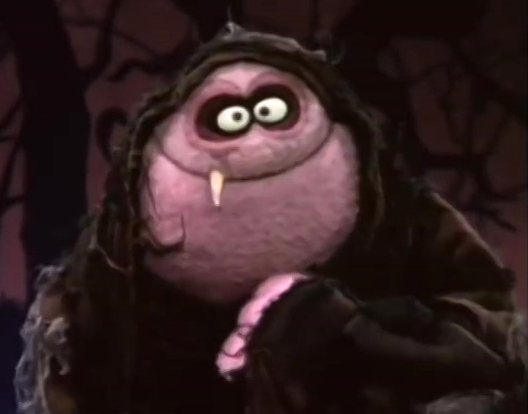
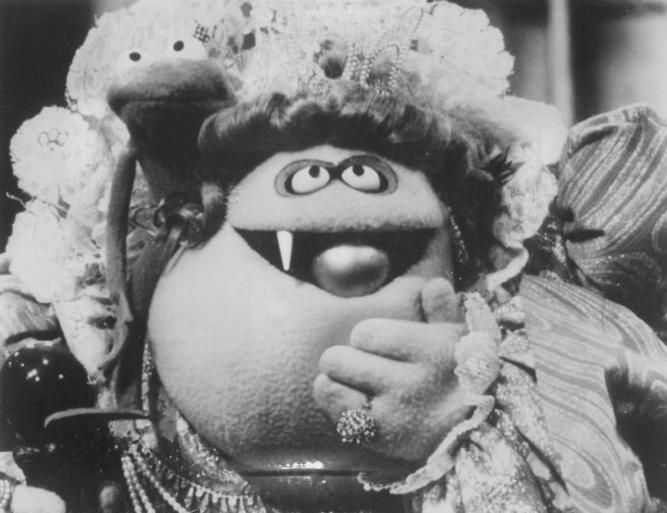
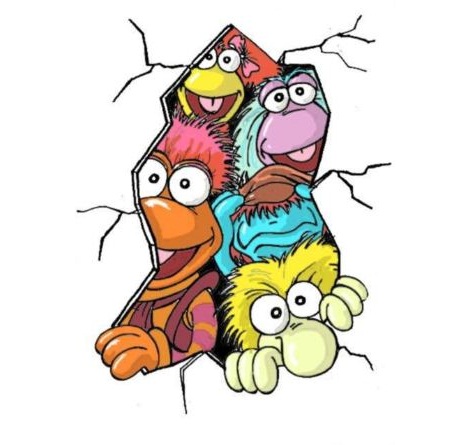
 Turkey Hollow is a picturesque town where hundreds of years ago, unbeknownst to the citizens, a meteorite landed nearby a small brook on the outskirts of town. One Thanksgiving, while young Timmy Henderson practices his guitar, he’s accompanied by strange, unearthly, musical sounds. That meteorite wasn’t a rock at all but an egg holding seven furry, goofy monsters, each with a unique musical sound. After the initial shock, Timmy befriends the lovable creatures following him all around Turkey Hollow. Not everyone takes a liking to the visitors though and it’s up to Timmy to protect his new friends and save Thanksgiving!









.jpg)