1 The Muppet Mindset: Martin P. Robinson
Showing posts with label Martin P. Robinson. Show all posts

Jan 16, 2014

News Update: January 16, 2014

JANUARY 16, 2014

The Muppets Most Wanted merchandise train is finally leaving the station at the Disney Store. Yesterday, our friend Max Jessop alerted us to the fact that new Muppet plush are being released for the movie. The characters being made into plush are Constantine and, most excitingly, Rowlf the Dog! Check out pictures of the plush below. We also have been told that a lot more Muppets Most Wanted stuff is on the way as well.
CBS This Morning got the chance to send one of its correspondents, Mo Rocca, to the set of Sesame Street recently, where he got to learn how to be a Muppet performer from our friends Matt Vogel and Martin P. Robinson. The video is really, really cool and fun. Gotta love seeing the Muppet performers given the spotlight they so richly deserve.


Muppets Most Wanted is in the running in MTV's Movie Brawl, a March Madness-style tournament pitting the year's most anticipated movies up against each other. Muppets Most Wanted is up against something called Camp X-Ray that I've never heard of. So let's rock the vote, Muppet fans, and make sure the Muppets win the first round (and the whole thing, if we can help it)!

In big, hugely exciting news, the Center for Puppetry Arts in Atlanta, Georgia announced this week their plans for a major expansion to be completed in 2015. The press release has everything you need to know about the amazing full expansion, but here is the relevant Muppet related info:

In 2007, Jim Henson’s family announced a momentous gift of puppets and props to the Center for Puppetry Arts. We are thrilled that approximately half of our expanded museum space will be dedicated to the Jim Henson Collection. 

This interactive exhibition will follow Henson’s prolific imagination chronologically, transporting visitors through environments that typified the master puppeteer’s world such as Jim’s Office and the Television Studio.

In addition to learning how Henson’s characters came to life and are stillperformed, visitors will be able to view iconic puppets such as Kermit 
the Frog and Miss Piggy.

We are so, so thrilled for our great friends at the Center. They are a huge part of keeping the art of puppetry alive and well and their museum is absolutely amazing. If you ever have the chance to visit them in Atlanta, I cannot recommend it enough. Already they have on display Big Bird, Rowlf, Dr. Teeth, Emmet Otter, Mokey and Red Fraggle, Link Hogthrob and Dr. Strangepork, and plenty, plenty more. Take the time to see it if you can!


The Muppet Mindset by Ryan Dosier, muppetmindset@gmail.com

Aug 27, 2013

Sesame Workshop Wants to See Your Puppetry Skills

Some hugely exciting news this week from our friends Matt Vogel and Martin P. Robinson at Sesame Workshop. Sesame is holding a workshop for highly talented puppeteers, age 18 and over, who are looking to develop and hone their on-camera puppeteer skills. If you are familiar with the Sesame Street style of puppetry, and interested in the opportunity to participate in a puppeteer workshop in New York City in early 2014 please click here for more information:
http://www.sesameworkshop.org/puppeteer-workshop/

For a chance to attend the workshop, you simply have to create a three minute video of you puppeteering. The link above has more specific details. This is a huge, thrilling chance to perform for and alongside Sesame Street's finest puppeteers. Workshops like this are the best way to get your talent seen by the people at Sesame Workshop. Please note: this is not a training camp for inexperienced puppeteers, this is an effort by Sesame to find talented puppeteers and give them a chance to hone their skills with the best of the best.

This is an almost unprecedented opportunity for highly talented puppeteers. If you think you have what it takes, then get to work and submit your video now! There is no reason not to--and every reason that you should. How often do you get the opportunity to work with Matt Vogel and Marty Robinson? Not often. So hop to it, Muppet fans and puppeteers! Get your videos made and submit them before October 11th!


The Muppet Mindset by Ryan Dosier, muppetmindset@gmail.com

Aug 16, 2013

A Salute to Telly Monster

Michael Wermuth - Telly Monster has been on Sesame Street since the 10th season and has been a main character since at least the twelfth. He has had major roles in both of the Sesame Street movies as well as many of the specials and direct-to-video projects. In an era when many longtime classic characters don't appear in as many episodes as they used to (even Big Bird tends to appear in just a few episodes per season), Telly is one of the few to be heavily featured in almost every episode, as well as one of the few to regularly be the focus of the street stories, and yet he's still underrated.

Actually, I never really noticed that Telly was underrated until pretty recently. There haven't been too many Telly Monster toys, Telly has never had his own spotlight video or album (though I can't think of too many Telly segments that I'd call "The Best of Telly"). He has been prominent in a handful of recurring segments like Ask Oscar, Sneak Peek Previews, and Monster on the Spot, but since the show started having various segments appear in every episode (or every other episode) he has never hosted his own daily segment.

Let's take a look back at Telly's history. He was originally conceived as a monster obsessed with watching television, hence the name Telly. He had spinning spiral eyes and antennae, and often watched television too close to the screen. He first appeared in episode 1257, and was originally performed by Bob Payne, but after only a handful of appearances he was temporarily dropped from the show, his eyes changed and antennae removed so he could be used as a generic monster. Then when Caroll Spinney was unable to make it to work on the day of shooting a Big Bird episode, it was decided to bring back Telly, keeping the name but changing the personality, and given to Brian Meehl (the only other performer at the studio that day). Meehl gave Telly the voice and personality he's known for, and when Meehl left in 1984, Marty Robinson took over, initially imitating the voice Meehl gave him for a few years, before making the voice a little more different.

A lot has happened with Telly over the years. Since Brian Meehl started the character, Telly has always been a worrywart. Over time he has become obsessed with triangles, had such hobbies as playing the tuba and jumping on his pogo stick, has gotten a doll named Freddy and a hamster named Chuckie Sue, and has been a reporter for Monster on the Spot. He also developed a one-sided friendship with Oscar. Later on he would become friends with Baby Bear, but he and Oscar have still had some great moments together since.

As I said earlier, it is hard for me to think of the best Telly Monster moments, regardless of whether it's the best of the character or the best of Sesame Street. Last years "Best of Friends" DVD did a good job of selecting Telly clips. But there are some good Telly segments, such as when he played the tuba accompanied by Itzhak Pearlman on violin, or when he sold Kermit a head warmer, or he and Elmo sang "Heavy and Light," or when Elmo slept over at Telly's but couldn't sleep due to his snoring.

I don't know why Telly is so underrated, but perhaps his reason for being on the show for so many years is because of his performer, Martin Robinson. Since becoming a Muppet performer, most of Robinson's work has been on Sesame Street, with very few performances in other Henson productions. So he hasn't been too busy with other productions, allowing him to stay on Sesame Street for the whole year. Even in recent years Marty is among the few Sesame Street Muppet performers who doesn't have to balance his schedule between performing for Sesame Workshop and Disney's Muppets.

 So let's all give a shout-out to Telly Monster!


The Muppet Mindset by Ryan Dosier, muppetmindset@gmail.com

Mar 20, 2013

Weekly Muppet Wednesdays: Buster the Horse

Today's article was written by Michael Wermuth, Jr. If you would like to write an article for Weekly Muppet Wednesdays, please email us at muppetmindset@gmail.com!

BUSTER THE HORSE

Performed by...
Martin P. Robinson

First appearance...
Sesame Street Episode 1446 (1980)

Most recent appearance...
Sesame Street Episode 4089 (2005)
 
Best known role...
Forgetful Jones' horse.

WHO IS BUSTER THE HORSE?
Buster the Horse is Forgetful Jones' horse and companion. In some early segments, Clementine helps Forgetful remember to do tasks she thinks are for him, only for it to turn out Forgetful is supposed to remember to help Buster with things, such as remembering to brush Buster's teeth (while Buster brushes Forgetful's) or to give Buster a bath. However, Buster is not entirely dependent on Forgetful. After all, he's another character who can help Forgetful remember things, and Forgetful needs Buster to give him rides (after all, Buster is the one who operates the jeep).

Buster has also appeared without Forgetful Jones on many occasions. In the video release Learning About Letters, Buster appears to teach viewers that "horse" is an H word, and later embarrasses himself by dressing as a zebra for the letter Z. In Bedtime Stories and Songs, he wonders how others can sleep laying down, since horses sleep standing up. Buster and Fred the Wonder Horse once dressed as cow back-up singers when Gladys the Cow sang "Proud to be a Cow," and on another occasion Buster and Gladys sang a song about how they are "Different Yet the Same."

WHY DOES SESAME STREET NEED BUSTER THE HORSE?Well, Forgetful Jones needs Buster more than Sesame Street does. After all, the more help Forgetful Jones can get in remembering things the better. And Forgetful Jones needs him when he needs to go for rides. He's also a horse, and Sesame Street doesn't have many other named horses.


The Muppet Mindset by Ryan Dosier, muppetmindset@gmail.com

Jan 23, 2013

Weekly Muppet Wednesdays: Slimey

SLIMEY

Performed by...
Martin P. Robinson (1980-present)
Dick Maitland (voice)
Jerry Nelson (1978)
Michael Earl Davis (1978-1980)

First (known) appearance...
Sesame Street Season 2: Episode 0262 (1971)

Most recent appearance...
Sesame Street Season 43 (2012)

Best known role...
Oscar the Grouch's pet worm; astronaut; race car driver; soccer player

Family...
Oscar the Grouch (owner)
Dusty (father)
Eartha (mother)
Sloppy (sister)
Squirmy (cousin)
Rachel (cousin)
Dirty (pet bug)

WHO IS SLIMEY?
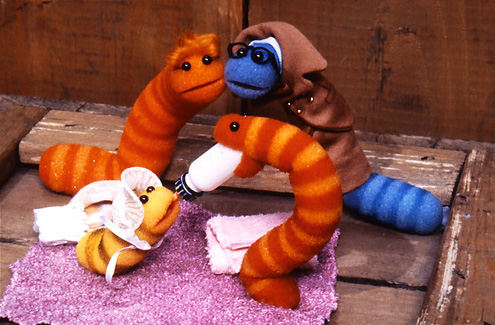
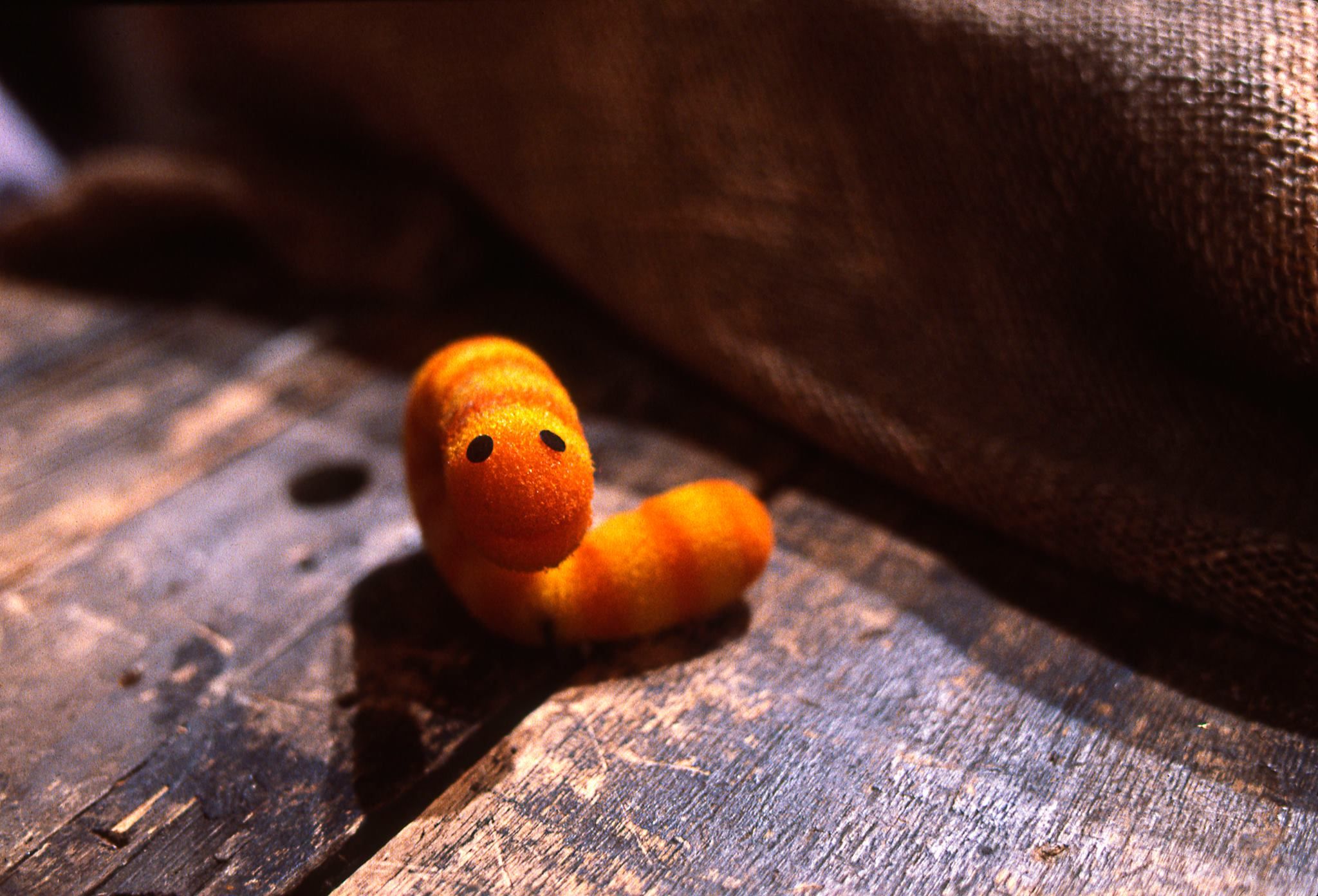
Slimey is a tiny worm who is Oscar the Grouch's many pets, but undoubtedly Oscar's favorite. Slimey lives with Oscar in his trash can and is one of the only creatures who can bring a smile to the Grouch's face. Slimey's first known appearance was in an early Season 2 episode of Sesame Street where Oscar enters him in a pet show. Slimey has continued to be a big part of Oscar's life, and Sesame Street, ever since.

According to a flashback on the show, Slimey and Oscar first met in the park on a rainy day. Oscar went to see mud puddles and found a mud puddle with worms playing in it. Oscar saw a baby worm playing by himself. The young worm crawled up Oscar's shoulder and fell asleep. Oscar took the worm home, named him Slimey, and a new friendship was born.

Slimey has quite an extensive family that has been part of the show, including his parents Dusty and Eartha, sister Sloppy, and cousins Squirmy and Rachel (the obvious black sheep of the family). Slimey has also been seen with a girlfriend named Glo Worm. Slimey even adopted his own pet, a bug named Dirty, in Episode 4175 in Season 39. Slimey's many worm friends have visited Sesame Street a lot over the years, as members of the WASA space program, worm soccer teams, and racers in the Squirmadega car race.

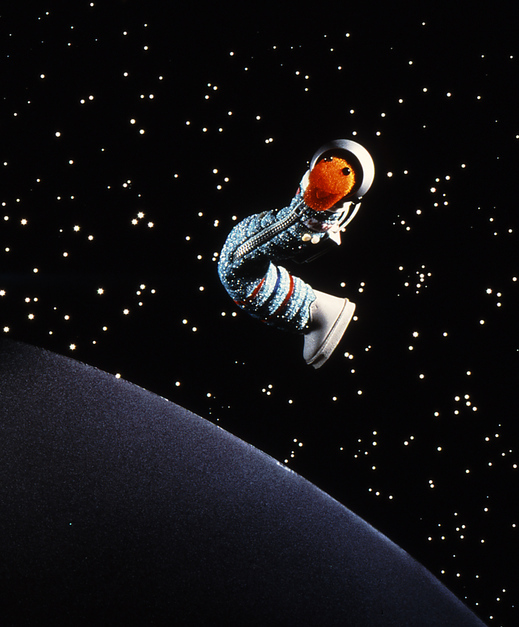
Oscar's little worm is also one of the only Muppets to travel to space. For a long arc of episodes in 1998, Slimey was recruited and trained by WASA, the Worm Air and Space Agency, for a mission to the moon with other worms from all over the world. The worms took off on the spaceship Wiggleprise and Tony Bennett even sang him to the stars with the song "Slimey to the Moon." After the launch, Slimey and the other worms starred in a recurring segment called "Worms in Space."

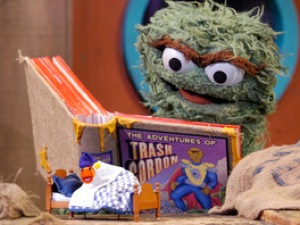
In recent seasons Slimey starred with Oscar in a recurring segment at the end of the show called "Trash Gordon," starring Gordon as the titular space cadet. In the segment, Oscar reads Slimey his favorite bedtime stories from the Trash Gordon series.

Slimey has been a prominent character for many years and in many episodes on Sesame Street and will be seen in Season 43 and Season 44.

WHY DOES SESAME STREET NEED SLIMEY?
Slimey is an interesting little worm. He has a family and friends and a pet, he has played soccer, raced cars, and even traveled to space. All of these things make him a truly amazing little fellow, but he is needed on Sesame Street because he makes Oscar the Grouch happy. Slimey is one of the only things that Oscar truly cares about. Slimey adds another dimension to Oscar, giving him feelings and cares. He may be one of the only worms to go to space, but it's on Earth and in Oscar's care that he truly makes a difference.


The Muppet Mindset by Ryan Dosier, muppetmindset@gmail.com

Oct 4, 2012

Not Quite Muppets

Kyle Mahoney - Throughout history there have always been puppets, and although many strive to be as lifelike and beloved as Jim Henson's Muppets... they're just not considered Muppets. But many have connections to the Muppets, and although they aren't Muppets I feel like some of them deserve to have a bit of recognition here at the Muppet Mindset. So we'll take a few well known puppets and see how they're connected to the Muppets and how they aren't.

Audrey II - Little Shop of Horrors
This carnivorous alien plant first took root in 1982 in the off-Broadway musical Little Shop of Horrors. The plant was designed and manipulated by Martin P. Robinson (Telly Monster and Snuffy on Sesame Street) but was not a direct product of The Jim Henson Company. Several versions of Audrey II were made, from a tiny, dying bud to a full-fledged monster able to swallow a person whole!

Four years later Frank Oz would adapt the show into a film, his first non-Muppet production. The film would still utilize puppetry for Audrey II. As with the original production many different versions of the puppet were built, all of which used advanced animatronics. Although Henson did not have a hand in the project he did know many people who worked on the project, including his son Brian Henson who was a principle puppeteer for the plant.

In 2003 the show was revived on Broadway and once again Marty Robinson stepped in and built the puppets used. But this time The Jim Henson Company helped him out and was credited in the design. Other Muppeteers who became part of the production included Matt Vogel and Anthony Ashbury.

Yoda - Star Wars
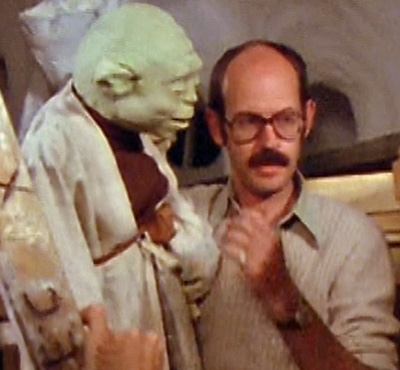
Long ago in a galaxy far, far away... a little green man made English teachers cringe. In Star Wars: The Empire Strikes Back, we are introduced to the greatest Jedi master who ever lived, Yoda. A common misconception is that Henson built Yoda and not farther from the truth could that be. Yoda was actually built by Stuart Freeborn who worked for Lucasfilm. Altough Jim and George Lucas did exchange a few technological ideas, that was the extent of Henson's involvement on the project.

Frank Oz, on the other hand, took a much bigger part in the character's creation. Not only did Frank help design the puppet, but he is perhaps best known as Yoda's voice performer with assistance from Kathryn Mullen. Lucas was so impressed with Oz's performance that he put Oz's name in the possibilities for the category Best Actor in a Supporting Role at the Academy Awards.

When George Lucas created the prequels for Star Wars, Oz once again provided the voice but with the exception of The Phantom Menace, Yoda was done with CGI. Currently Oz does not perform the voice for Yoda in the animated series Star Wars: The Clone Wars, Tom Kane has taken over.

Avenue Q
In 2003 the Broadway show Avenue Q took puppets to a much more mature level, dealing with adult subjects. The play is meant to mirror the set-up of Sesame Street in that humans live amongst monsters and puppets in a New York City street. The puppets were built by former Muppeteer Rick Lyon through his puppet company. Although a bit of a legal dispute arose due to the similarities of the characters, the show was still put on with a fine print stating that the production is in no way affiliated with Sesame Workshop, The Muppets Studio, or The Jim Henson Company.

Lyon not only built the puppets but performed the characters Nicky, Trekkie Monster, and a Bad Idea Bear. Other Sesame Street performers joined him as well. John Tartaglia starred in the production as the characters Princeton and Rod, for which he was nominated for a Tony Award. Stephanie D'Abbruzzo performed Kate Monster and others and was also nominated for a Tony Award. Jennifer Barnhart took on a few roles and was an auxiliary puppeteer for when two characters played by the same performer were onstage or when a live hand puppet needed the use of both hands. The performance mimicked certain aspects of Sesame Street such as teaching new words such as Schadenfreude (happiness at the misfortune of others) and the idea of two very different people being roommates with Nicky and Rod.

So although they aren't Muppets or Henson creatures, let's tip our hats to these characters for being great works of puppetry that have just enough of a connection to Henson that we can talk about them with the same affection.


The Muppet Mindset by Ryan Dosier, muppetmindset@gmail.com

May 18, 2012

Interview with Muppeteer Martin P. Robinson, Part 3

Interview with Muppeteer Martin P. Robinson
conducted by Ryan Dosier
 
RYAN:   Do you want to talk a little about your work with Sesame International? What productions have you helped out with?

MARTY:   Canada, Mexico, Israel, Palestine, France, Germany, Egypt, Russia, India, Indonesia, Bangladesh, and China.

RYAN:   My goodness. That is just incredible.

MARTY:   It is, I agree. It’s just astounding the places that this crazy thing has taken me. Did I say Northern Ireland? I didn’t say Northern Ireland.

RYAN:   How does it feel to have such an impact on the world?

MARTY:   Great. I was speaking of that a bit before. It’s really great to be able to teach what I know to these people, to be able to pick them, train them. The thing is, you can’t hire until you train, because you don’t know if they’re gonna take to the training. So the process is training, auditioning, and then you weed them out as you go along until you’re down to your basic crew. But when they get it, oh God it’s so exciting. Exciting for them, exciting for me, exciting for the people watching them, the crews, the directors… because they get it, they get the style and they have the ability to be effective teachers in their culture. I have friends, and students, and children all over the world that I’ve taught this craft to. I keep in touch with many of them and it’s really nice, especially when a project has longevity and they can do it for many, many years.

RYAN:   We get to see a little bit of Kevin Clash teaching people in Being Elmo. It looks so rewarding and amazing.

MARTY:   There’s a documentary called The World According to Sesame Street, have you seen that one? That’s the one that follows the productions in Kosovo and Bangladesh. You really get a taste for what that’s like.

RYAN:   Oh yeah. It’s such a struggle, but once it happens it’s just so great.

MARTY:   Yeah, it’s always a struggle, but there’s always time when you think “this is never gonna work.” Because these people are hopeless and they’ll never get it! But I’ve never not had an astoundingly successful company. It always works out in the end. Sometimes producers ask me how I do it and what’s my process and what my teaching process that I use is. It’s kind of tough to quantify, it’s kind of tough to write down. I had written all my exercises down but when they ask for guarantees that the process is gonna work, pretty much what I say is, “It’s kind of like magic.” I don’t really know how it works... but it always works. You have to trust. Trust in yourself and the system and your intuition and all those kind of intangibles... then it’s gonna come together.

RYAN:   Could you talk a little bit about working with the human actors on Sesame Street? They’re all so wonderful and most of them have been doing it for so long. Who are some of your favorites to work with? I’m sure you’re going to say all of them, but...

MARTY:   You know, they all get different types of scripts and provide different types of services depending on who their characters are. For instance, I love working with Bob as the straight man. When he does the crazy, crazy costume stuff and the silly stuff, yeah, that’s one thing, but I love when Bob is just Bob. He’s just one of the best straight men ever and it’s really useful to have a straight man with all of these crazy Muppets running around. We can’t all be crazy.

When Ruth Buzzi was on the show, Ruth was amazing and she was just as crazy as we were! She’s really the only human who has ever risen to our crazy level and then surpassed it. We used to do scenes with her and I would get crazy and she would get crazier and I would get crazier and then she would get crazier still! We would do this kind of one ups manship, you know, how flat our insane can you be. And these scenes just had this crazy hysteria. That was always fun.

I love working with Chris as Telly. Telly and Chris have a very special relationship. Telly and Alan have a very special relationship. Telly really works with those two really well and really digs ‘em and is very safe with them. I love Alan. Alan is very sweet, very safe, very fatherly, and protective of Telly. Chris gets really nutty with him and Telly kind of abuses Chris’s good nature slightly.

I just love working with Sonia. I love it when she gets silly too. And Gordon... Roscoe, Roscoe Orman--he’s kind of like Telly’s dad. Gordon is the dad that Telly never had and Telly just loves him--loves him dearly. If it wasn’t for Gordon, Telly would have gone mad years ago. He really would have. Telly had it rough at home, and Gordon knew about that, in my mind, and made up for it. He took up the slack, stepped up to bat, like a real man. It was a good thing that he did with Telly. And again, this is nothing but my back-story! Roscoe Orman may know absolutely nothing about this, but that’s not important to me, but it is important to Telly.

RYAN:   What about the other Muppet performers?

MARTY:   Oh, it’s great. You get in the same room with them... when we’re in the green room in the morning or at lunch, or God help us we’re out on the scene--it’s such great fun. You know, Kevin... Kev has got a lot of responsibility there, so it’s really nice when he can not be directing and not be producing and just be there having fun. That’s when I enjoy Kev the most. Of course, when he’s putting his director hat on or his producer hat on, he does that really well and we enjoy that, but I love it when he can cut loose and relax a little bit more. You know, do the puppetry that he does so brilliantly.

Pam Arciero is one of my best friends, my partner in Telly. Tyler Bunch is just crazy and the range of characters that he can do, and do really well, is just astounding. Carmen Oshbar is a very, very sweet girl, very funny. I’ve worked with she and Rosita and Telly just loves Rosita--he actually has a crush on her. Fran Brill is one of my favorite people. I love Prairie Dawn best of all of her characters... Prairie Dawn is such an abnormal little girl, very strange, very weird, but very, very useful. I wish we had a lot more Prairie Dawn stuff.

Eric Jacobson... I just love his Bert, it’s great. When Steve Whitmire comes back to play it’s always fun, although he’ll usually come back to do Ernie and do Bert and Ernie bits, he’ll be back for two, three days and I won’t even have seen him, but I love working with those guys as well.

Leslie Carrara is--again, I don’t use this term lightly... but I’ve used it three times already in this talk--she’s one of my favorite people in the world. She is just amazing. I’m constantly amazed by her. Her level of energy and the way her mind is on fire all the time. She has an amazing mind and is a brilliant performer. Her stand-up comedy act is amazing and she’s got live shows that she puts together... she’s just a girl on fire.

Oh, Caroll Spinney... he is the oldest child I know. Caroll Spinney is a child. (laughs) I just love him dearly. He is the sweetest man. It’s just strange because Snuffy and Bird are best friends and that translates to Caroll and I, you can’t act being best friends all those years without a lot of it rubbing off, a lot of it being really real, really true stuff.

It’s the same way with Dave Rudman. I’m very fond of Dave Rudman. His work is so good. He’s just an amazing performer, he’s one of those performers from the Richard Hunt school that really does their homework and comes prepared and can improvise on a dime, but can stay very close to the script and knows exactly where he’s going with something. If you slip him something new, he’s right there, you can’t put anything over on him because he’s absolutely present in every moment. One of my favorite things is when Dave and I are doing a script we talk to the script supervisor or the producers who run that aspect of it... they know that they’re gonna get it done really good and really fast. If they keep me around for any reason, it’s because of things like that. Dave and I have the highest percentage of first take finishes than anyone. We can finish a scene in no time at all and it’s just exactly the way it should be. We have so much fun doing it.

Matt Vogel is great. Nobody knows how great a performer Matt Vogel is yet. He hasn’t quite had the chance to really show it. He’s got some really good characters that he’s done, some of them are ongoing, but he’s just brilliant.

And Joey Mazzarino... is just certifiable. If I didn’t like him so much, I would be horribly jealous of him. (laughs) Considering that he’s the head writer, he’s one of our main directors; he’s got all these brilliant puppets that he does. I just love Stinky, he’s one of my favorite new characters--and that crazy elephant that he does is just so off the wall, you can’t imagine how off the wall that is! The stuff that comes out of his mouth between takes or when he’s rehearsing... you just can’t imagine what comes out of this sweet man’s mouth. It’s just unprintable. I’ve never really had a chance to work with Murray since he’s not on the set and just on the street. There’s a little film on the website I was telling you about (Sesame Family Robinson), in the Muppet section... with Telly and Murray in Hooper’s Store just kind of talking about puppetry on the Street. It’s a nice little scene.

RYAN:   That’s really cool. I will definitely be checking that out.

MARTY:   Also check out a series of films on there called “Handy Man.” It’s just a set of little work boots that I put on my fingers and they walk around. He has a lot of backstage Sesame Street stuff that he’s done. He goes and kind of explains how the control room works.

RYAN:   I think I’ve just got one more question... and this is another one that doesn’t really have an answer.

MARTY:   In that case it’ll be easy!

RYAN:   Can you tell me how to get to Sesame Street?

MARTY:   Yeah... you take the R train to Steinway Street and you get off at the back of the train, get off at the corner of Steinway and 36th Street and you walk down to 36th and 34th Avenue and it’s Koffman/Astoria Studios... but you won’t get past the guards unless you have ID or unless somebody’s expecting you. We’re up on the third floor! And that’s it. That... or maybe practice, practice, practice... but maybe that’s Carnegie Hall.

RYAN:   That’s on another street, isn’t it?

MARTY:   (laughs) Yeah, that’s on 57th. Sesame used to be elsewhere, we’ve bounced around a lot... but Sesame is really a way of presenting yourself to the world. It’s a little slice of life that’s maybe a little bit more the way should be than the way things are.

RYAN:   Without a doubt. This has just been wonderful and just incredible.

MARTY:   I have no idea how you’re gonna transcribe this to anything possibly useful that’s not gonna be like 150 pages!

RYAN:   I’ll make it work, trust me! Thank you so much, Marty!

MARTY:   Sure! Thanks, Ryan.
Infinite thanks to Marty Robinson for his wisdom, time, and kindness. I can never thank him enough for not only for this interview, but also for the magic and wonder he has brought to me and the world.

Be sure to check out the blog of Marty and his wife Sesame Street writer Annie Evans, B is for Blog - Sesame Family Robinson which chronicles their life at home, their work on Sesame Street, and so much more. It's a treasure trove of goodness!


The Muppet Mindset by Ryan Dosier, muppetmindset@gmail.com

May 11, 2012

Interview with Muppeteer Martin P. Robinson, Part 2

We're back again with Sesame Street Muppeteer Martin P. Robinson, performer of Snuffleupagus, Slimey the Worm, and Telly Monster. Be sure to check out Part 1 of our interview before reading on.
Interview with Muppeteer Martin P. Robinson
conducted by Ryan Dosier

RYAN:   Let's move on to Telly. Telly is one of my very favorite characters.

MARTY:   He is my favorite character. I mean, of all my characters.

RYAN:   He sort of has to be.

MARTY:   Well, I don't know, he doesn’t have to be, but he is. He's the most complex character

He's evolved over the years. When I took him over he was a fairly depressive, psychotic character almost--really down. He has evolved into a much more complex character who can react in a much more complex way. He can still get just as depressed or just as worried, but he can also get just as elated or excited about things. When he changes from one to the other—which he can do on a dime—he does it honestly. There's no emotional subterfuge in him. He just really feels strongly about things and reacts very strongly and instantly to whatever's going on. It makes him very popular with the writers, which is great. He’s useful for a lot of different types of stories. A lot of the writers cite him as one of their favorites as well.

RYAN:   One of my favorite recent episodes with Telly was “Texas Telly” when he searched for the Golden Triangle.

MARTY:   Oh that was a good one. We had some fun with that. Joey Mazzarino, who actually wrote it and directed it, we had a bunch of the scenes [from Indiana Jones] on his iPhone. We’d look at the scenes before we shot it. He was trying to match some of the scenes shot for shot and I would see what was going on with the acting moments and try to get as much of that stuff in as we could. It was great fun.

RYAN:   What about Telly’s relationship with Oscar? That used to be played up a lot more.

MARTY:   Yeah, yeah, that was kind of old Telly. Telly used to kind of be Oscar’s whipping boy—his tool. It was a pretty sadomasochistic relationship if you look at it. Oscar got to torture him, and Telly somehow found being tortured useful. You know, he considered Oscar his best friend. There is of course a cautionary lesson there. We can all look back at friends we’ve had in our past and think, “Oh God, that really wasn’t a good friend at all, was it? That friend was abusive and did not have my best interest in mind, it was all about him.” I can think back to fifth grade, best friend I had back then—thought he was my best friend—but I’ve had best friends since then and I know what they’re like, and that wasn’t it.

In the same way that I’ve learned about what a friend is and is not, Telly learned. Actually, one of my favorite things about Telly is his relationship with Baby Bear. Because it’s a really good buddy relationship, they have fun together, and they respect each other, and they learn from each other and they make mistakes, but they’re buddies in the best way. You know that buddy you had when you were 12? It’s that kind of buddy. And he looks back sometimes at his Oscar years and thinks, “What was I doing? Why did I put up with that?” And there have been a few scripts over the years, since Baby Bear, where Oscar has kind of tried to wind him up again, but Telly won’t wind that way. He’s immune to Oscar now.

RYAN:   This is sort of an obscure reference/question, but there was one appearance you made with the most of the cast, I think, and Fran Brill brought Zoe—the teeny, tiny Zoe puppet. How did Telly react to that?

MARTY:   You’re talking about the time we had that live thing on stage up at that university in New Jersey or someplace. You’ve seen the video then, the video that the Muppet Wiki people put up?

RYAN:   Yes, that one. What did he call her? A homunculus?

MARTY:   A little homunculus Zoe, yeah.

RYAN:   That always cracks me up!

MARTY:   When I do Telly, sometimes some pretty wild things pop out of my mouth. I go to my Telly place and I free associate, and you know Telly has some pretty unusual ideas about things, and I guess I do as well. Anyone who tells you that the puppet character is not the puppeteer’s character is just lying to you. Or they’ve just gone so far into the… I wouldn’t say up their backside, but you know what I mean. I just tap into my nutty part and Telly comes up with that stuff.

When I go to Telly, which I can go to immediately, he has certain fears. When a friend of his—for whatever reason the producers decided to do that, and they’ve since undone it—but for whatever reasons, it wasn’t Telly’s reasons. And Telly can’t look at that and not comment on it because something happened and needs to be noticed, he can’t just brush it under the rug.

For years—and there’s still a twinge of it left—Telly had a fear of the Count, because he thought that the Count was the undead and was going to suck his blood. He’d seen Dracula movies and so he wasn’t sure what was going on there. It colors his relationships with characters. I have a background story for Telly. What his childhood was like, what his parents are like, how he was treated and how he reacts to things and that flavors how he looks at the world.

RYAN:   What does Sesame Street mean to you?

MARTY:   Ah, that old one. The one that really has no answer. It’s kind of home, personally. It’s where I go to be with some of my best friends and laugh my butt off all day long—that’s my job. My wife is one of the writers there, so she comes in and we speak the same language as far as work goes. She has her side of it and I have my side of it. We’re entering into her busy season now, my busy season will be in the fall after she’s written what she’s going to write. It works out well that way. I’ve been very pleased and proud to have that kind of work consistency with something that’s profound and meaningful and has never gotten tiresome whatsoever. I love my work with Sesame International that I’ve done and all the traveling.

There are those aspects of it—all those kind of practical, human aspects, what I think you’re really asking is what is the deeper meaning to me. As far as the show goes, it’s really great to have my job and my work be something that is of substantial meaning to humanity. There’s no question that I am influencing kids’ lives in a positive way, no question whatsoever. That’s not just my crazy opinion; it’s hundreds of millions of people’s crazy opinion. Likewise my work with Sesame International, and doing that all over the world… I have personally made huge differences in people’s lives, by the puppeteers that I’ve trained and hired and set loose upon the children of their countries.

Sesame has given a really strong anchor of profundity and meaning to my life so that I don’t worry about that. We kind of worry, as humans, whether you’ve made a difference, whether what you’re doing really counts. Being involved with the show, I know what I’m doing counts, so I can kind of relax in a certain way; it’s kind of weird. I don’t worry about that stuff anymore so I’m kind of relaxed in my personal life, which means I’m a better husband, a much better father, a better human being than I would be otherwise if I was all bunged up with worrying about my dumb job. I think anyone could do that with any job that you really love and that you consider a useful, honorable thing. It doesn’t have to be wiggling dollies on Sesame Street, it just happens to be what I do and I really love what I do. The feedback, the positive feedback, is great.

RYAN:   That’s just incredible. I think all of that makes so much sense because what you do does make such a difference to so many people. It’s mind boggling to think about. I think it’s just amazing.

MARTY:   Yeah. God, we have fun! It’s such hard work. It is so hard. Anyone who thinks that they want to be a puppeteer, it’s so much fun... yeah, but it is just astoundingly difficult. It’s not for the faint of heart. When you’re in a studio that costs $20,000 a minute or whatever it costs to produce with a studio full of the best equipment in the world, and the most highly trained people in the world, and all the people who support the show that aren’t actually in the studio… When you’re in there and you’ve got a puppet on your hand and all the cameras are focused on you and the guy says 5, 4, 3, 2, 1 and points at you, man, you’ve gotta deliver. You can’t be thinking about the weight of the world on your shoulders, or what it costs per second for production time, or everything that’s gone into it. You’ve got to think about what your intent is, who your character is, where you’re going with the scene, that you’ve done your homework, that you know what’s going on. When that finger points at you after 1, it’s a huge responsibility.

RYAN:   I imagine that has to be some strange mix of freeing, very liberating, but also very serious, you have to get it done.

MARTY:   Yeah, oh yeah. It’s the weight of the world, it’s very serious. What makes it crazy is that you take it seriously, but you can’t take it seriously. You gotta free your mind, take the serious things into consideration—as in you’ve done you’re homework and you know what you need to know to get the job done. To get the job done you’ve got to jump into joy, into this positive good zone. I say it to every puppeteer I’ve ever trained: If you’re not having a good time doing it, nobody’s gonna have a good time watching it.

Watching those guys do Stuffed and Unstrung, that’s just astounding to watch. It’s everything I was talking about times a thousand for that type of thing when you don’t have a script and you don’t know what you’re partner’s gonna do, and you go ahead and jump into it with all you’re worth anyway.

RYAN:   And in that case you don’t really even know your character that well.

MARTY:   Right! You’ve gotta invent your character, it’s just amazing. I trained with them for awhile and it was some of the most difficult training I’ve ever done. It was just mind boggling how frightening that was, which probably kept me from the place where I was free with it. I was just too concerned. It’s just astoundingly difficult.
Check back next Friday for our third and final installment of our interview with Martin P. Robinson where we discuss almost everyone he works with, share some stories, and a whole lot more.


The Muppet Mindset by Ryan Dosier, muppetmindset@gmail.com
The Muppet Whatnot Workshop-Only Available at FAO.com
The Muppet Whatnot Workshop-Only Available at FAO.combanner