1 The Muppet Mindset: Muppetology 101
Showing posts with label Muppetology 101. Show all posts

Jun 12, 2014

Muppetology 101 - Intro to Fraggle Botany

Abigail Maughan - The realm of Fraggle Rock has a vast amount of biodiversity, not only in its heterotrophic life forms, but also in its autotrophic ones. Today we’re going to be studying some of the most notable plant specimens exclusive to Fraggle Rock. There are quite a bit of them, so let’s get started! We’ll be breaking this lesson into two sections—deadly plants, and everything else.

DEADLY PLANTS—


“BIZARRE KILLER PLANTS*”
* The most official name we’re given for the species comes from the Storyteller Fraggle.

SEEN IN: Episode 202: Boober Rock
LOCATION: The Caves of Boredom (or the Caves of Forgetfulness, depending on who you ask.)
PHYSICAL APPEARANCE: Large pinkish-purple flowers with twisty green vines
DANGEROUS ABILITY: The flowers release a gas that when inhaled causes the unfortunate victim to forget first personal details, then their entire identities, before eventually reducing them to an unresponsive, catatonic state, having forgotten motor skills and language.
SURVIVAL TIPS: The Fraggle Five survived their encounter with these plants thanks to the strongly-scented laundry cleaner Boober Fraggle conveniently brought along, which allowed them to regain their bearings and flee. The Storyteller also recommends writing down your intentions before going there, in case you forget. Just don’t forget how to read, which is entirely possible. Avoiding the location all together seems like the best survival tip of all.

CLINGING CREEPERS

SEEN IN: Episode 311: The Burden, the Beanbarrow, and the Bright Bouquet
LOCATION: Table Rock Cavern
PHYSICAL APPEARANCE: Mobile, bumpy, asparagus-like vines of varying widths
DANGEROUS ABILITY: Despite moving somewhat slowly, they wrap themselves around Fraggles to entangle and strangle them.
SURVIVAL TIPS: The scent of fresh flowers wards Clinging Creepers away, and the Fraggles have organized the Clinging Creepers Emergency Flower Defense League for this very purpose. Having flowers on you or as a companion (like Lanford the plant to Red Fraggle) is also handy.


SINGING CACTI

 SEEN IN: Episode 411: Wonder Mountain
LOCATION: around Wonder Mountain
PHYSICAL APPEARANCE: Eyeless cactus creatures with limbs and mouths.
DANGEROUS ABILITY: Singing their inexplicably hypnotic song "Do the Sashay" entrances passersby, who become, as Mokey Fraggle's Wonder Mountain guide book simply puts it, "trapped forever."
SURVIVAL TIPS: Wear earplugs when near them, as Mokey Fraggle did to save Red Fraggle when she fell into their trap, and as they both did when leading the pursuing Avalanche Monster into the pack to save their skins. Better yet, don’t go anywhere near them at all, as they only appear to activate when provoked.

In any environment, deadly and aggressive plants and animals will evolve, and seeing that Fraggle Rock is no exception to this natural law is somewhat satisfying. The intelligence and aptitude of Fraggles has enabled them to survive, thrive, and coexist with these predatory plants. Fortunately, not all plants in Fraggle Rock need to be avoided, as we’ll see next.

PLANTS THAT AREN’T INHERENTLY DANGEROUS—


NIGHT-BLOOMING YELLOW-LEAVED DEATHWORT

FIRST SIGHTING: Episode 220: A Cave of One’s Own
LOCATION: One lives in Mokey and Red’s bedroom.
PHYSICAL APPEARANCE: A bumpy, brownish-green head with a toothy mouth, similar to a Venus flytrap, on top of a springy stem with mottled green and yellow leaves. Can also sprout pink-spotted flowers.
CHARACTERISTICS: The living habits of the sentient Deathwort in the wild are unclear, as the only one we’ve seen, Mokey Fraggle’s pet Lanford, is domesticated... sort of. If judging off of Lanford, they appear to be temperamental, stubborn, and mischievous, but intelligent and loyal to their friends. Strangers, enemies, and Red Fraggle, however, would do well to stay away.
UNIQUE ABILITIES: The plants become covered in red spots and must undergo a brief hibernation before flowering. And by “brief,” I do mean as short as approximately one minute and 45 seconds. They communicate using guttural vocalizations, and can understand both Fraggles and other plants.


THE NIRVANA TREE

SEEN IN: Episode 511: The Gorg Who Would Be King
LOCATION: A corner of the Gorgs’ garden
PHYSICAL APPEARANCE: Thin golden trunk and branches with golden leaves
IMPORTANCE: According to Gorg culture, the King of the Universe sustains his position until all of the leaves fall off of the Nirvana Tree. After that, the new heir, whoever that may be, takes over.
UNIQUE ABILITIES: In our only sighting of the magic tree, Junior Gorg, reluctant to step up to the job, eats the tree’s last leaf and is immediately shrunken to the size of a Fraggle. He then makes a trip through Fraggle Rock, and is restored to his normal size once he realizes the expansiveness and interconnectivity of the world he lives in. So, in a roundabout way, the Nirvana Tree is responsible for the end of the enmity between the Gorgs and the Fraggles.

KNOBBLIES AND THE TREE OF LIFE

SEEN IN: Episode 506: Beyond the Pond
LOCATION: The tree resides in Merggle Lake, with roots stretching through several underwater tunnels all the way to the Fraggle Pond, much to the annoyance of the pond’s users, namely Red Fraggle.
PHYSICAL APPEARANCE: The gnarled pink roots found in the pond are known as Knobblies, and they lead to a massive tree with twisted brown branches.
IMPORTANCE: The immense Great Tree, also known as the Tree of Life, is the home of a marine Fraggle-like species with flippered tails called Merggles. The Merggles’ prophetess Merboo describes the tree as “the center of all life, and the probe into the unknown.”
UNIQUE ABILITES: The roots are capable of transmitting telepathic messages to and from whoever touches them.
WEAKNESS: As Red learns, then later regrets and remedies, the plant can be killed with Kohlrabi juice.

RADISHES

SEEN IN: The radish, or Raphanus sativus, is the most vital plant in all of Fraggle Rock, and is seen in some form in virtually every single episode.
LOCATION: Grown in the Gorgs’ garden. Also the only plant on this particular list to exist outside the realm of Fraggle Rock.
PHYSICAL APPEARANCE: Red spherical vegetable with single root stretching out the bottom. Green leaves grow above the ground for photosynthesis and convenient pulling purposes.
IMPORTANCE TO FRAGGLES: Inadvertently discovered by a young Traveling Matt, radishes replaced mushrooms as the primary food source of the Fraggles. A majority of Fraggle culinary dishes and treats are made from radishes, such the coveted Radish Bar snacks. Mokey Fraggle is one of the designated collectors of the vegetable.
IMPORTANCE TO DOOZERS: Doozers collect radishes by their own means, grind them up, and mold them into building material. The Fraggles eat the finished constructions, allowing the Doozers more space to build, showing symbiosis at work.
IMPORTANCE TO GORGS: Gorgs supply the radishes, but rely on them as well, for the plant is a crucial ingredient in Anti-Vanishing Cream, which Gorgs must apply regularly to stop themselves from physically disappearing from the top downward.
The radish is arguably the best, or at least the most clear, example of the innate interdependency that Fraggle Rock illustrates so frequently. As Junior Gorg so eloquently puts it, “It all fits together!”

The flora of Fraggle Rock serves many purposes, from providing food to inspiring tales and traditions. Fraggle Rock is such a unique and wondrous place, that examining the diversity of all its life forms, even the ones without dialogue, provides real insight into the creative minds behind this amazing ecosystem. The landscape of Fraggle Rock isn’t a sterile, Styrofoam backdrop; it’s a rich, vibrant world.


The Muppet Mindset by Ryan Dosier, muppetmindset@gmail.com

Mar 13, 2014

Muppetology 101: Advanced Property Ownership

Michael Wermuth - Ten years ago last month, The Walt Disney Company purchased the Muppets from The Jim Henson Company, without buying the whole company. To casual fans, it can be confusing to figure out what all Disney owns, exactly. It should be obvious that Disney owns the Muppet characters and properties from The Muppet Show and related productions, but it can still be confusing. After all, there’s several productions that aren’t related to any specific show, some of which feature characters who would later become major, or feature appearances by Kermit, some of which are retained by Henson and some included in the Disney deal. And while the Muppet name would be more commonly associated with those characters introduced on The Muppet Show and similar productions, The Jim Henson Company had continued to use the “Muppet” name to refer to its characters from most of its productions (save the Creature Shop stuff) until 2004. This article is intended to educate you on who owns what. There’s  a number of Muppet specials that crossover various properties owned by different companies. And there’s also the fact that many Henson productions were distributed by other companies, who still own the distribution rights while Henson or Disney owns the characters and such.

First, let’s talk about Sesame Street. Sesame was always produced and distributed by Sesame Workshop (formerly Children’s Television Workshop), but until 2000, The Jim Henson Company retained the rights to all characters created for the show. Henson did produce a handful of Sesame Street productions (often with Sesame Workshop), including the specials Out to Lunch and Sesame Street: 20 and Still Counting, as well as the film The Adventures of Elmo in Grouchland.

In 2000, The Jim Henson Company, under ownership of German company EM.TV, sold the rights to the Sesame Street characters to Sesame Workshop. However, while Sesame Workshop does not own the “Muppet” trademark, Sesame Workshop is allowed to use the Muppet name to refer to its characters. Sesame Workshop is also allowed to continue releasing existing Kermit the Frog appearances, and The Jim Henson Company still constructs the Sesame Street Muppet characters. And the distribution rights to a number of Sesame Street specials and movies are owned by other companies: ABC owns Out to Lunch, Bob Banner Productions owns A Special Sesame Street Christmas, Warner Bros. owns Sesame Street Presents: Follow That Bird, The Jim Henson Company owns Sesame Street: 20 and Still Counting, and Sony owns The Adventures of Elmo in Grouchland.

As for Disney’s Muppet properties, Disney owns the Muppet name as well as all associated characters, including everyone from Kermit the Frog, Miss Piggy, Fozzie Bear, and Angus McGonagle. Muppet properties owned by Disney include the television shows The Muppet Show, Muppet Babies, the Muppet portions of The Jim Henson Hour ("MuppeTelevision," "Miss Piggy’s Hollywood," and "Secrets of the Muppets"), and Muppets Tonight, the Muppet movies, and countless Muppet specials, home video productions, and viral videos. Additionally, Disney owns the distribution rights to a number of productions that might seem like a surprise: "The Muppet Meeting Films," the specials Hey Cinderella!, The Frog Prince, The Muppet Musicians of Bremen, Tale of the Bunny Picnic, and Mr. Willowby’s Christmas Tree, the series Little Muppet Monsters, the Play-Along Video release "Neat Stuff to Know and To Do," and the "Muppet Time" interstitials.

The 2004 Disney deal also included the rights to Bear in the Big Blue House, and by extension Disney also owns Bear in the Big Blue House Live and Breakfast with Bear. Disney has also always owned the distribution rights to Dinosaurs, though I’m not sure whether the characters are owned by Disney or Henson. Additionally, regarding distribution rights, before the 2004 deal, Disney has always owned the rights to The Muppets at Walt Disney World, The Muppets Celebrate Jim Henson, The Muppet Christmas Carol, and Muppet Treasure Island. The distribution rights to The Muppets Take Manhattan, Muppets from Space, and Kermit’s Swamp Years are owned by Sony, It’s a Very Merry Muppet Christmas Movie is owned by NBC Universal, and the two John Denver and the Muppets specials are owned by John Denver’s estate. Disney owns the big crossover specials between the Muppets, Sesame Street, and Fraggle Rock (The Muppets: A Celebration of 30 Years and A Muppet Family Christmas) but still need permission to release the specials with the characters they do not own.

There’s The Jim Henson Company, which owns everything else from the company. Primary properties include Fraggle Rock, The Dark Crystal, Labyrinth, Farscape, The StoryTeller, The Animal Show with Stinky and Jake, and Emmet Otter’s Jug-Band Christmas, as well as the various Henson Alternative programming and CGI shows such as Sid the Science Kid and Dinosaur Train. Obviously, the company owns the rights to various live-action non-puppet projects from the company, including Time Piece, Youth ’68, The Cube, and Family Rules. The company also owns the non-Muppet portions of The Jim Henson Hour, including Song of the Cloud Forest and Monster Maker, as well as Dog City (which heavily features Rowlf).

And of course there are Henson Company properties that other companies own the distribution rights to. Sony owns the distribution rights to Labyrinth, Buddy, and Mirror Mask, Warner Bros. owns The Witches, and Nelvana owns the Dog City TV series.

There are also some productions that I’m not sure who the owner is (some lecture this is!). I know that NBC Universal owns Sam and Friends, but I’ve always been unclear who owns those characters. I always thought Henson owns the characters (except for Kermit), as the company has put a clip from the show on its YouTube channel and in recent years and Yorick had been rebuilt for Puppet Up!, but then the recent book The Muppets Character Encyclopedia has a section on Sam and Friends characters. I’m not sure which company owns Tales of the Tinkerdee (I would think Disney). I also wonder which company owns the rights to the recently-found "Cinderella" pilot from 1965. And there’s also the question of who owns The Jim Henson Hour pilot "InnerTube," which mainly features characters who would never be seen again, but also heavily features Digit, and has a fair amount of Kermit, not to mention The Jim Henson Hour Pitch Reel, which heavily features Muppets and Creature Shop characters, but also promotes Jim Henson’s plans for the show, which was a big mix of Muppets and other Henson stuff.

Well, that’s a lot of knowledge on who owns what (a lot of which I don’t even know). Due to all this ownership splits, there likely won’t be many crossovers like A Muppet Family Christmas again. But then again, did any of us expect the three companies to work together to have their characters included in "Jim Henson’s Musical World" in April, 2012? How many of us thought there’d be a new Kermit photo on the cover of the Sesame Street video "Silly Storytime"? And who would have thought a Sesame Street clip with Kermit (when there’s scores of Kermit clips Disney could have used for free) would appear in Muppets Most Wanted?


The Muppet Mindset by Ryan Dosier, muppetmindset@gmail.com

Mar 3, 2014

Muppetology 101 - Basic Frog Cloning

Maxwell Jessop - Welcome again to Muppetology 101. It’s me, Max the How To guy! I’m here to guest lecture again. This time I’m going to discuss examples of Kermit the Frog doppelgängers in history. You’d be surprised how numerous they are.

The Mechanical Wind-Up TV Show Host

  • This Kermit look-alike is the first doppelgänger, not counting impersonators in costume, to be seen in their long history. The Mechanical Wind-Up TV Show Host, sometimes called Robot Kermit, was made by J.P. Grosse in Episode 104 of The Muppet Show. He is made in the exact image of Kermit and, using his likeness, took over hosting duties and made out of character advances to Miss Piggy. At the end of the episode, much to Kermit’s enjoyment, the Mechanical Wind-Up TV Show Host breaks down, leaving Kermit to once again fulfill his duties.
  • Differences: The Mechanical Wind-Up TV Show Host is much more aggressive and mischievous than Kermit, likes Miss Piggy romantically, and, very uncharacteristically, bears a wind-up key on his back.

The Koozebanian Phoob

  • The Koozebanian Phoob, while only appearing in one sketch, is one of the more difficult-to-identify Kermit dead-ringers. He begins the sketch bearing blue shaggy fur, a long, forked tongue, thick black eyebrows, yellow-tinted eyes, and fangs. But, as he explains himself in the sketch, he evolves faster than other Koozebanian creatures, allowing him to transform and shape-shift into whatever he chooses. To illustrate, the Phoob transforms into Reporter Kermit and attempts to confuse the audience using this “Survival of the Trenchcoated” technique.
  • Differences: More nasally voice (a la Jerry Nelson) and eventual devolution resulting in blue fur, fangs, long tongue, yellow eyes, and eye brows.

Lenny the Lizard

  • While not quite a doppelganger and more an impersonator, Lenny the Lizard bears a sinister resemblance to Kermit the Frog. However, he looks more like Kermit in his Sam & Friends days. He bears pale turquoise skin, yellow-tinted eyes, flatter arms, and black eyebrows. He auditions to be the new host in Episode 208 of The Muppet Show and his shtick is eerily similar to the format Kermit uses.
  • Difference: Pale green skin tone, yellow-tinted eyes, eyebrows, flatter arms, and deeper voice supplied by Richard Hunt.

Kermit the Pig

  • Kermit the Pig is the head honcho of The Muppet Show for Episode 224 when the pigs take over the show. As host, Kermit the Pig attempts to emulate Kermit’s abilities and way of presenting, much like Robot Kermit and Lenny the Lizard. The appearance of Kermit the Pig is almost exactly the same as Kermit’s except with the addition of a snout and ears and a greener skin tone. Of course, all his efforts are futile when Kermit and the gang escape from the boiler room.
  • Differences: Snout, ears, lighter green skin tone, and higher, more nasally voice courtesy of Dave Goelz.


Kismet the Toad

  • Kismet the Toad appeared in The Muppet Show Comic Book arc "The Treasure of Peg-Leg Wilson." He is a no-nonsense conman whose art of convincingness has everyone believing he is Kermit the Frog. However, it is plain to see Kismet’s style nowhere near mimics that of Kermit. In all honesty, he tries very little at worthy impression, and relies on his street smart to win everyone over.
  • Differences: Wears a leather jacket, plain white tee, dark sunglasses, and has malicious goals and evil tendencies.

Kermoot

  • Member of the Moopets tribute group, Kermoot, despite being the Moopet equivalent of the star and host, barely gets a line in The Muppets and is relegated to a singing in the chorus upstage from Fozzie Bear. His appearance, however, like most Moopets, sets him apart from most Muppets and other talking frogs.
  • Differences: Dark green skin tone, black eyebrows (I’m seeing a pattern), blue eyelids, mouth piercings, and urban (or gothic) black clothing.

Constantine

  • Finally, the most recent and most popular Kermit doppelganger, Constantine. Based on the information we have regarding Muppets Most Wanted, Constantine is the number one most wanted frog in the world and a recently escaped convict. During the Muppets’ world tour, he makes use of his similarity to Kermit the Frog and makes a classic Prince and the Pauper-style switcheroo. Constantine is the most similar Kermit lookalike and only bears a prominent black mole on his right cheek and a shorter pointed collar as differences. He also has a Russian accent, is a black belt in karate, is a master of escape, and an expert of explosives. All in all, he can be summed up as Kermit if he was a criminal.
  • Differences: Russian accent, mole on right cheek, shorter collar, occasionally wears a Ghost of Christmas Yet-to-Come-esque cloak, and skilled in villainous activities.

Well, there you have it. The history of Kermit the Frog--I mean, not Kermit--I mean Kermit lookalikes. This is so confusing! At least you know how to spot the difference!


The Muppet Mindset by Ryan Dosier, muppetmindset@gmail.com

Dec 10, 2013

Muppetology 101: Muppet Music Appreciation, Part 2

Michael Wermuth - We're back with part two of our look at various Muppet bands...
Little Jerry and the Monotones -
Debuting in the second season (though some precursors were seen in the first), Little Jerry and the Monotones is a group consisting of hippies who sing doo-wop songs, including such hits as "Mad", "Sad", "Danger", and of course "Telephone Rock." Band members include Little Jerry, Big Jeffy, Rockin' Richard, and Chrissy. Their biggest fan is Gina, whom they visited in an episode from the 1980s. Elmo once filled in for Little Jerry in the early 1990s.
Chrissy and the Alphabeats -
Also known as "Chris and the Alphabeats" and "Little Chrissy and the Alphabeats," but this Chrissy shouldn't be confused with the member of the same name from Little Jerry and the Monotones. The lead singer is, obviously, Chrissy, who plays the piano and sometimes keyboards, but the names of the Alphabeats is anyones guess. This band is perhaps the most prominent on Sesame Street. Their biggest hit is probably "Count It Higher," but they have also done such great songs as "You're Alive" and "Rock and Roll Reader." They have also occasionally popped up to sing Don Music's songs as soon as they are completed.
The Beetles -
A Muppet parody of The Beatles (whoever they are), this fabulous insect four was responsible for such hits as "Letter B" and "Thinking of U," and once joined Cookie Monster for a rendition of "Hey Food." And no, the drummer is not dead (I don't think).
Bruce Stringbean and the S Street Band -
A parody of Bruce Springsteen and the E Street Band, this group has performed the hits "Born to Add" and "Barn in the USA." Although the "Born to Add" album refers to the "S Street Band," we don't really see much of the band in either number (unless you count Clarice's sax solo).
How Now Brown and the Moo Wave -
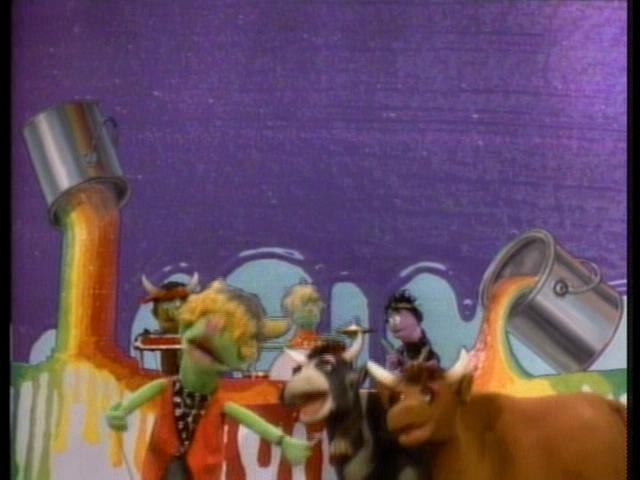
A new age punk rock band, this group includes How Now Brown on lead vocals, two cow back-up singers, and Anything Muppets providing the music. They are known for the hits "Danger's No Stranger" and "Wet Paint." Their music is really mooooving.
The Oinker Sisters -
The Oinker Sisters are a group of pig sisters (who knew?) whose biggest hit is "A New Way to Walk," which they have sung at least twice. Originally a punk group, the Oinker Sisters would later change their look from punk to classic and sing such songs as "Where Can You Be, B?" They even showed up for an episode of Elmo's World.

Well, those are the bands from The Muppet Show and Sesame Street. Now go out and buy their albums! Wait, what's that? None of them have albums? Not even the Electric Mayhem? What a shame.


The Muppet Mindset by Ryan Dosier, muppetmindset@gmail.com

Dec 7, 2013

Muppetology 101: Muppet Music Appreciation, Part 1

Michael Wermuth, Jr. - Music is an important part of the Muppet world. Almost every Muppet sings and/or plays an instrument. With the Muppets being so musical, it makes sense that there are Muppet bands and music groups, and today we're going to learn about them. First, here's some of the more notable bands from the "Muppet Show" family of productions.

DR. TEETH AND THE ELECTRIC MAYHEM
Unless you've been living under a rock (or your Muppet knowledge is primarily limited to productions from the 1990s), you should know that Dr. Teeth and the Electric Mayhem are the most prominent Muppet band of all time. You probably know that the members consist of Dr. Teeth on keyboard, Floyd Pepper on bass guitar, Animal on drums, Janice on lead guitar, Zoot on saxophone, and sometimes Lips on trumpet. And you probably know that The Electric Mayhem is responsible for such hits as "Can You Picture That?" and "You Can't Take No for an Answer," and that they have performed alongside such artists as Elton John, Lou Rawls, and Paul Simon.

THE COUNTRY TRIO
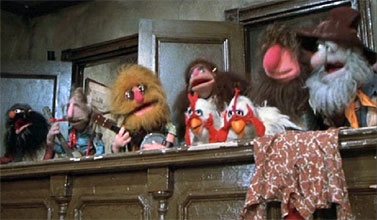
This country band consists of hillbilly caricatures of Jim Henson, Frank Oz, and Jerry Nelson. (You know who they are, right?) Jim plays banjo, Jerry plays guitar, and Frank plays cello. They performed in a number of guest appearances on talk shows before The Muppet Show debuted, and only appeared on The Muppet Show a few times, performing such unforgettable numbers as "To Morrow" and "Summertime." There were a number of hillbilly bands that were used more often, however...

THE GOGOLALA JUBILEE JUGBAND
This first Muppet jugband (before Emmet Otter's Jug-Band and the second Muppet Show Jugband) consisted of a banjo player, a guitar player, a jug blower, an old man on fiddle, and a girl singer. Unfortunately, very few of them were named, but they performed such great songs as "You Can't Rollerskate in a Buffalo Herd" and "I'm My Own Grampa," and have backed up such guest stars as Jim Nabors and Twiggy. The Gogolala Jugband has rarely appeared outside of their own numbers, and for unknown reasons were replaced by...

LUBBOCK LOU AND HIS JUGHUGGERS
The second jugband on The Muppet Show, consisting of Slim Wilson on guitar and vocals, Lubbock Lou on mouth harp, Zeke on banjo, Bubba on jug, Gramps on fiddle, and Lou also on vocals. It is unknown why the jugband needed to be replaced, and keeping the first wouldn't have had any consequences, though the members of this jugband were frequently seen outside of the jugband numbers (though none of them became real characters). They have performed such great songs as "Henrietta's Wedding" and "Borneo," and have backed up guest stars including Loretta Lynn and Roy Clark.

BOBBY BENSON'S ALL-BABY BAND
A band consisting of musical babies, managed and conducted by the rather suspicious character Bobby Benson. None of these babies are known to have names, but are musically talented despite their young ages. They have impressed with such great tunes as "Pennsylvania 6-5000" and "Baby Driver," and once provided back-up for Victor Borge.

GERI AND THE ATRICS
Perhaps meant to contrast the baby band, Geri and the Atrics is a rock band consisting of old ladies. Geri plays the cello, but very few of the other members names are known. Some of their hip hits include "Hound Dog" and "Who Put the Bomp in the Bomp-Sha-Bomp-Sha-Bomp." Oddly enough, Geri is the one seen the least, being replaced with a tambourine player after the band's second appearance (though the band kept Geri's name in the title).

SOLID FOAM
The house band for The Jim Henson Hour, Solid Foam consisted of Clifford on bass, Beard on guitar, Digit on keyboard, Flash on saxophone, and a female drummer whose name is unknown. It is unclear which member is the leader, but they have performed such great hits as "The Music Just Keeps on Rolling Along" and have provided back-up for such guests as Smokey Robinson and kd Lang. Unfortunately, as good as they are, all of their music (as well as vocals) are synthesized.

THE EXTREMES
A singing group of aliens who performed two numbers on The Jim Henson Hour, "Neutron Dance" and "Uh-Oh Here She Comes." If the show hadn't been cancelled, this group could have become more prominent mainstays in the cast.

MUPPETS TONIGHT BAND
Unfortunately, none of the fans know the official name of this band, nor do we know the names of many of the members. This zydeco band was probably meant to replace The Electric Mayhem, but they didn't do anything that the Electric Mayhem likely wouldn't have done in the 90s. This band was only used in musical numbers providing back-up, never having their own songs. There were two episodes that began with Clifford talking to the band.

Well, that's it for The Muppet Show world of Muppet bands. Join us next class period for the Muppet bands and singing groups from Sesame Street.


The Muppet Mindset by Ryan Dosier, muppetmindset@gmail.com

Nov 12, 2013

Muppetology 101: Identifying International Sesame

Mitchell Stein - Since it's start in 1969, Sesame Street has reached billions of viewers and has broadcasted in over 120 countries. In order to reach each and every child in every part of the world, Sesame Workshop has started over 20 different international Sesame Street spinoff series. In this article, we'll showcase just a few of the many international shows, and their differences from the original U.S. version.

Plaza Sesamo - Mexico, Peurto Rico
Plaza Sesamo is the Latin- American production of Sesame Street. It features a mixed cast of Panamanian, Argentinian, and Latin- Americans. The series began on April 3, 1995 and has been running ever since. The show's cast includes Abelardo Montoya, (Plaza Sesamo's version of Big Bird), Bodoque (a version of Oscar the Grouch), Lola, Pancho, Elmo, Cookie Monster, Grover, Ernie and Bert.

Sesamestrasse - Germany
Sesamestasse first aired in Germany on January 8, 1973. It is currently in it's 39th season. The cast includes, Ernie and Bert, Elmo, Grover, Cookie Monster, and a new cast consisting of Samson, Tiffy, Finchin, Buh, Feli Fliu, Rumpel the Grouch and his worm Gustav (version of Slimey).

Ruchov Sumsum - Israel
Along with Israel's other Sesame-inspired show, Shalom Sesame, Ruchov Sumsum was founded in 1983, starting with characters like Kippod Ben Kippod and Moishe Offnik, the Israeli character counterparts to Big Bird and Oscar the Grouch. The show also features American based characters, Grover, Elmo, and Ernie and Bert.

Sesame Park - Canada
Sesame Park was the Canadian counterpart of Sesame Street and aired from 1996 until 2002 on CBC, but Sesame Park has a much larger history dating back to several five minute segments featured on Sesame Street Canada. The shows cast are exclusively brand-new characters including Chaos, Basil, Louis, Katie, and Dodi.

That's all for now! We'll feature some more unique international soon! Class dismissed.


The Muppet Mindset by Ryan Dosier, muppetmindset@gmail.com
The Muppet Whatnot Workshop-Only Available at FAO.com
The Muppet Whatnot Workshop-Only Available at FAO.combanner